


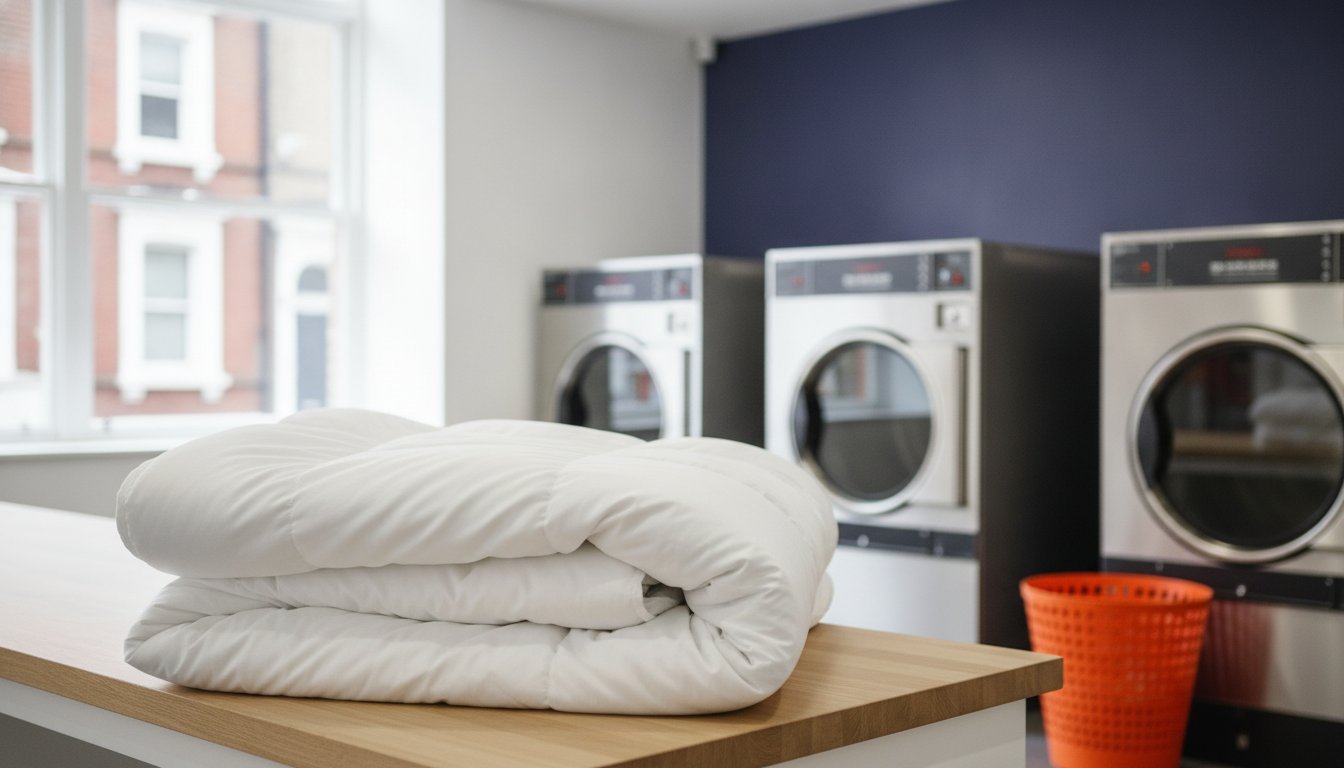
What if that “tumble dryable” label on your favourite king-size duvet is actually a recipe for disaster? You’ve likely spent a frustrating Sunday afternoon battling a damp, heavy mass of feathers that refuses to dry, only to be left with a lingering musty scent. It’s a common headache for many of our neighbours here in N16, and it’s exactly why finding a reliable duvet cleaning service Stoke Newington can trust is so vital. While manufacturers technically claim these bulky items can be dried at home, the cramped reality of a domestic drum often tells a very different story.
We agree that your bedding should be a source of comfort, not a chore that leaves you with lumpy filling and lost warmth. In this guide, we’ll reveal why those care labels are often misleading and how you can avoid ruining your expensive down or feather investment in a standard machine. We’ll explore the science of airflow, the necessity of restored loft, and how professional care ensures your bedding returns to you crisp, fresh, and impeccably soft.
Key Takeaways
- Learn why the “tumble dryable” symbol is a technical rating for heat resistance, not a guarantee that the item will dry safely or effectively in a standard domestic machine.
- Understand how limited airflow in smaller drums leads to “crunchy” textures and lumpy filling that home drying simply cannot resolve.
- Discover how a professional duvet cleaning service Stoke Newington residents trust uses industrial moisture sensors to prevent fibre damage and restore original loft.
- Identify the warning signs—such as yellowing or shifted filling—that indicate your bedding requires specialist treatment rather than a risky home cycle.
- Protect your investment in expensive feather or down bedding by opting for a “minimal fuss” professional finish that ensures a crisp, fresh result every time.
The Tumble Dryable Label: What It Actually Means for Your Duvet
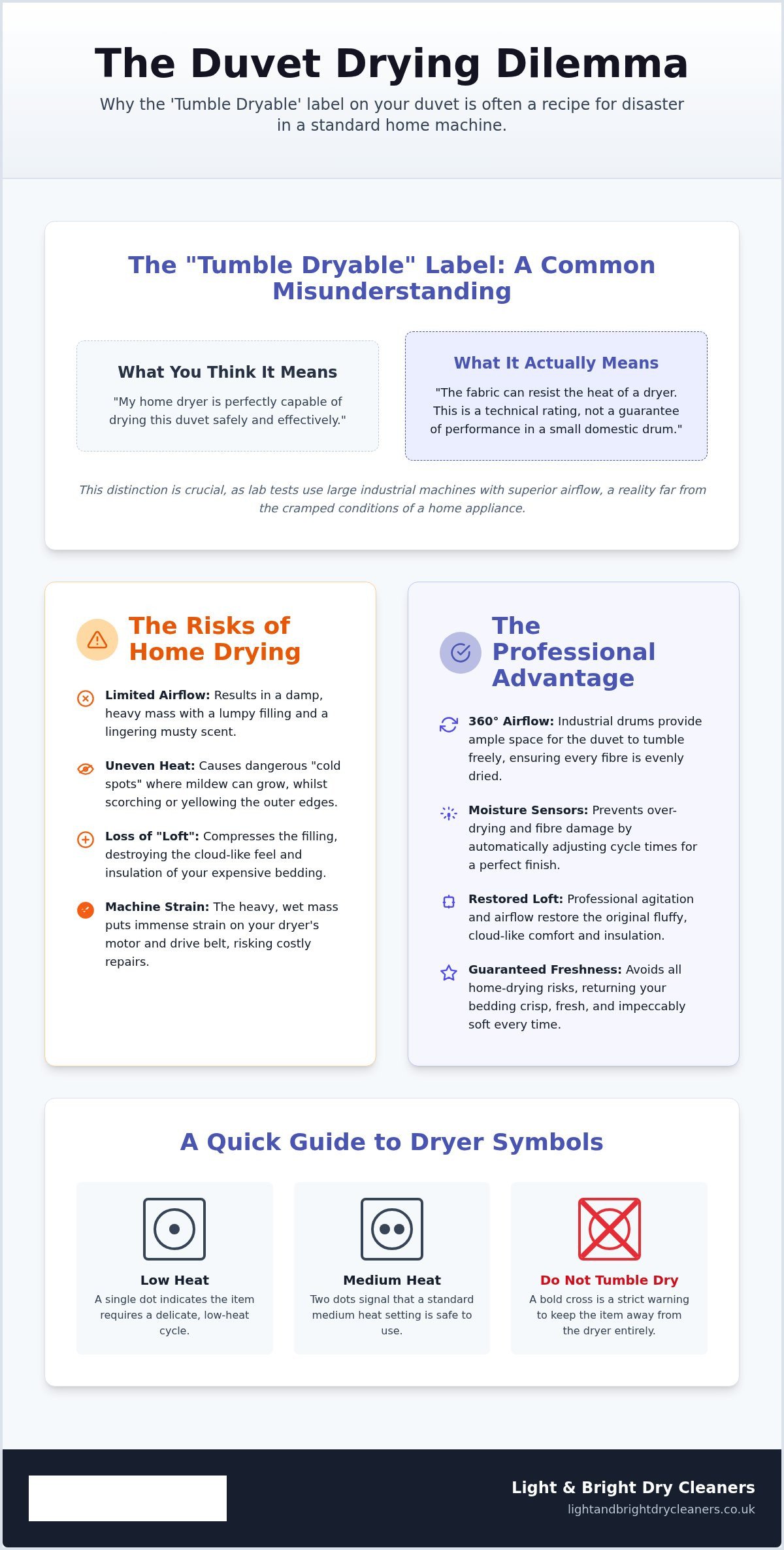
When you see a circle nestled inside a square on your bedding tag, it’s easy to assume your home dryer is up to the task. However, this symbol is often misunderstood. It doesn’t mean your machine has the capacity to handle the item; it simply indicates that the fabric and filling are technically heat-resistant. This distinction is vital for anyone researching What is a duvet and how its specific construction affects drying requirements. Manufacturers test these items in laboratory conditions using industrial-sized drums that provide 360-degree airflow. In your N16 kitchen, the reality is far more cramped.
The first thing you’ll lose in a tight domestic drum is “loft.” Loft refers to the air trapped within the filling that provides insulation and that signature cloud-like feel. Without space to tumble, the filling compresses, turning your lightweight bedding into a heavy, lumpy sheet. Choosing a duvet cleaning service Stoke Newington residents rely on ensures this loft is restored through professional agitation and proper airflow that a home appliance simply can’t provide.
Decoding the Care Symbols on Your Bedding
Look closer at that square symbol to find the fine details. One dot inside the circle means the item requires low heat, whilst two dots signal that medium heat is safe. If you spot a bold cross over the symbol, it’s a strict warning to keep it away from the dryer entirely. Ignoring this can lead to melted synthetic fibres or brittle down. At Light and Bright, we act as your wardrobe’s best friend by meticulously checking these labels before any treatment begins. Our experts on Boleyn Road ensure every item receives the specific temperature it needs to emerge flawless and fresh.
The Myth of the “Home-Safe” King Size Duvet
Many Stoke Newington residents believe that if they can shove a king-size duvet into the machine, it’s safe to run the cycle. This is a risky gamble. When a bulky item fills the entire drum, there’s no room for air to circulate. This creates dangerous “cold spots” where the centre remains damp and prone to mildew, whilst the outer edges are scorched by the heating element. It’s a recipe for a ruined investment. To put it simply: “tumble dryable” is a laboratory standard that rarely translates to the practical limitations of a standard N16 kitchen appliance.
By opting for the duvet cleaning service Stoke Newington locals recommend, you avoid the “minimal fuss” turning into a major headache. We use specialised commercial equipment designed for bulky household textiles, providing the meticulous care your home machine simply cannot match. This protects your bedding from the uneven drying and fibre damage that often occurs in domestic settings.
Why Home Tumble Dryers Struggle with Bulky Bedding
While the care labels might suggest a home dry is possible, the physics of a domestic tumble dryer often tell a very different story. For a duvet to dry properly, it needs ample space to actually “tumble.” This movement is what allows hot air to penetrate the dense filling, ensuring every fibre is reached and dried. In most N16 kitchens, the dryer drum is simply too small for a 10.5 tog double or king-size item. Instead of tumbling, the bedding stays slumped in a heavy, wet mass. This doesn’t just prevent drying; it places immense strain on your machine’s motor and drive belt, potentially leading to costly repairs.
There is also a genuine risk of scorching your favourite bedding. When a bulky item is packed tightly into a drum, it cannot move away from the heating element at the back. This leads to heat damage or yellowing on the outer fabric whilst the core remains damp and prone to mildew. Many people try to fix this using the “tennis ball” trick to break up lumps, but this only works if there is enough space for the balls to actually bounce. In a cramped machine, those balls just get trapped in the folds, adding weight without helping the loft. If you want to avoid these risks, using a professional duvet cleaning service Stoke Newington residents trust is a much safer alternative.
Drum Capacity vs. Actual Drying Volume
It’s a common mistake to assume a 7kg or 8kg machine can handle a large duvet. These ratings usually refer to dry cottons, not wet, absorbent bedding that expands and becomes incredibly heavy when damp. When the drum is overfilled, you’ll inevitably encounter the “balling” effect. This is where the duvet twists into a tight, damp knot, trapping moisture in the centre that no amount of home drying will reach. For more detail on how different materials react to heat, see our Ultimate Guide to Duvet and Bedding Cleaning in London (2026).
Energy Consumption: The Hidden Cost of DIY Drying
Running a domestic dryer for three or four hours to dry a single item is incredibly inefficient. It’s not just about the high electricity bill; it’s the environmental impact of such long, high-heat cycles compared to efficient industrial equipment. By following the standards for Complying with the Care Labeling Rule, our professional machines use precision sensors to stop exactly when the item is crisp and dry. This meticulous approach protects the fibres from over-drying and brittleness.
For busy Londoners, the “minimal fuss” of dropping off your bedding at our Boleyn Road shop far outweighs the stress of a damp home laundry room. If you’re tired of lumpy duvets and endless drying cycles, pop in today to experience the difference of expert care.
Home Drying vs. Professional Duvet Cleaning in Stoke Newington
The tactile difference between a duvet dried in a cramped kitchen and one handled by a duvet cleaning service Stoke Newington expert is unmistakable. Home machines often produce a “crunchy” or stiff texture because they lack the sophisticated airflow and moisture control found in industrial equipment. Our professional dryers use high-precision moisture sensors that prevent over-drying. This is critical because over-drying makes natural and synthetic fibres brittle, leading to premature wear and tear. Instead of a stiff, uneven result, you get bedding that feels consistently crisp and soft across its entire surface.
Beyond the feel, there is the matter of hygiene. Domestic machines struggle to reach the high temperatures or provide the deep extraction needed to remove deep-seated allergens and dust mites. Professional-grade extraction pulls these particles out from the very core of the filling, providing a level of cleanliness that home machines simply leave behind.
The Problem with London Hard Water and Bedding
Residents in N16 are well aware of the challenges posed by London’s hard water. When you wash a bulky item like a duvet at home, the high mineral content in the water often leaves a residue within the fibres. Over time, this buildup makes your bedding feel heavy and less breathable. We use professional-grade softeners and specialised detergents designed to neutralise these minerals. This ensures your investment is impeccably maintained and remains as soft as the day you bought it, despite the local water quality. For a broader approach to maintaining all the fabrics in your home, our guide to household textile cleaning London residents rely on offers a comprehensive checklist to keep every item in pristine condition.
Odour Removal: Beyond Just “Fresh” Scents
Have you ever noticed a “musty” smell developing a few days after washing your duvet at home? This usually happens because moisture remains trapped in the dense core of the filling, even if the outer fabric feels dry. This trapped dampness becomes a breeding ground for bacteria. Our professional deodorising process in Stoke Newington doesn’t just mask these smells with perfumes; it removes the source of the odour through deep-cleaning and total moisture extraction.
Choosing a local dry cleaner near me on Boleyn Road means your bedding receives meticulous care without the stress of “making do” with domestic appliances. We treat every item as if it were our own, ensuring a flawless finish that makes your bedroom feel like a sanctuary again.
Signs Your Duvet Needs Professional Care (Regardless of the Label)
Sometimes the care label doesn’t tell the whole story. Even if it claims your bedding is “tumble dryable”, the physical condition of the item might suggest otherwise. If you notice the filling has shifted to the corners, leaving cold spots in the middle, you’re dealing with “lumping”. Home drying usually worsens this by compacting the damp clumps further. Another red flag is the “yellowing test”. These stains are often a build-up of sweat and body oils. If you dry a duvet without specialist pre-treatment, the heat will permanently “set” these oils into the fabric, making them impossible to remove later.
Bulky items with high tog ratings (13.5 or above) are simply too dense for the restricted airflow of an N16 kitchen dryer. They require the industrial capacity of a professional duvet cleaning service Stoke Newington residents trust. Safety is also a factor. Before you load your machine, check for loose threads or small tears. A tiny hole can quickly lead to a “feather explosion” inside your drum, which is a nightmare to clean and can damage your appliance’s internal sensors.
Down and Feather vs. Synthetic Fillings
Natural fillings like down and feather are particularly temperamental. They require specific, oscillating heat cycles to fully restore their loft and prevent clumping. Synthetic “hollowfibre” is more resilient but can melt or become uncomfortably “scratchy” if the heat is too high. Our tailoring and dry cleaning Hackney experts understand these nuances, ensuring every material receives the meticulous care it deserves. We use gentle, effective methods to protect the integrity of the filling whilst achieving a flawless finish.
The Age Factor: When is a Duvet Too Old to Save?
How old is your bedding? Most synthetic options have a lifespan of about five years, whilst high-quality down can last much longer if treated correctly. Professional cleaning extends this life by removing abrasive dust mites that slowly break down the filling. If your duvet feels unusually heavy even when it’s dry, it’s a sign the filling has collapsed and can no longer trap air effectively. At this stage, the insulation is gone, and even our expert equipment on Boleyn Road might not be able to restore its original warmth.
Don’t risk a feather explosion or ruined filling at home. Trust Light and Bright with your duvet cleaning today and enjoy that brand-new feeling once again.
Light & Bright: Expert Duvet Cleaning with Minimal Fuss in N16
At Light and Bright Dry Cleaners, we understand that your bedding is an investment in your comfort and health. Our philosophy is simple: we treat every item as if it were our own. This sense of personal accountability has made us a trusted guardian for household textiles across the local community. When you choose the duvet cleaning service Stoke Newington residents rely on, you aren’t just getting a laundry cycle. You’re getting the peace of mind that comes with professional expertise and neighborly warmth.
Our shop on Boleyn Road is equipped with specialised commercial machinery specifically designed to handle the weight and volume of bulky duvets. Unlike the cramped drums found in a typical N16 kitchen, our industrial equipment provides the 360-degree airflow necessary to restore loft and ensure total dryness. We take the “fuss” out of your weekly chores, allowing you to reclaim your Sunday whilst we handle the heavy lifting. We truly aim to be your wardrobe’s best friend, extending our meticulous care from your daily wear to your most precious household items.
Our Meticulous Process for Household Textiles
Every duvet that enters our care undergoes a rigorous and professional journey to ensure a flawless finish. We start with a detailed inspection to identify any loose threads or specific stains. We then apply targeted stain treatments to break down the sweat and oils discussed earlier in this guide. Our high-capacity washing process is followed by precision-controlled drying, where industrial sensors monitor moisture levels to prevent fibre damage. Finally, we perform a thorough fluffing to restore that cloud-like loft you love.
This level of care isn’t limited to your bedding. We offer a versatile range of services, including suit dry cleaning near me for those who need to look impeccably sharp for the working week. Whether it’s a delicate silk garment or a heavy winter duvet, our goal is always to provide a crisp, fresh result that exceeds your expectations. Our local expertise ensures that even the most difficult fabrics are impeccably maintained. If you’re looking to extend this same standard of care to your curtains, upholstery, and other home fabrics, our complete guide to household textile cleaning in London provides everything you need to build a thorough home care routine.
Visit Us on Boleyn Road Today
Ready to experience the difference of a professional finish? You can find us at 38 Boleyn Rd, London N16 8AU. We are conveniently located just around the corner for residents in both Hackney and Stoke Newington, making us your local one-stop shop for quality care. Pop in today or visit us in-store to chat with our friendly team about your specific bedding needs. Let us handle the meticulous work of cleaning your household textiles whilst you enjoy a hassle-free weekend in North London. If your drapes are also in need of attention, our professional curtain cleaning N16 service ensures your windows look as fresh and pristine as your bedding.
Reclaim Your Comfort with Professional Care
Navigating the care labels on your bedding doesn’t have to be a gamble. While that tumble dryable symbol suggests a simple home fix, the reality of cramped drums and restricted airflow often leads to disappointing, lumpy results. Choosing the expert duvet cleaning service Stoke Newington residents trust ensures your bedding receives the meticulous attention it deserves. We provide specialist care for down, feather, and synthetic duvets, restoring the signature loft and warmth that domestic appliances often destroy.
As Your Wardrobe’s Best Friend in N16, we pride ourselves on delivering a flawless finish with minimal fuss. Don’t spend your weekend battling damp feathers or worrying about musty smells. Let our experts on Boleyn Road handle the heavy lifting so you can return to a bedroom that feels like a true sanctuary. Trust Light & Bright with your bulky bedding – Visit us on Boleyn Road today! We look forward to helping you achieve the crisp, fresh sleep you deserve.
Frequently Asked Questions
Is it better to wash a duvet or dry clean it?
It depends entirely on the filling and the specific care label instructions. Natural fillings like down or feather often require specialist dry cleaning or professional wet cleaning to maintain the delicate oils that provide warmth. Synthetic duvets can often be laundered, but they still require the high-capacity drums found at a professional duvet cleaning service Stoke Newington residents use. We meticulously assess every item to choose the safest method that restores freshness flawlessly.
Can I put a feather duvet in the tumble dryer at home?
You can, but it’s rarely successful in a domestic setting. Natural feathers clump together when wet and require significant space and high-velocity airflow to separate and dry completely. Without the constant agitation and volume of a commercial machine, you’ll likely end up with a lumpy, uneven duvet that has lost its insulating properties. Professional equipment ensures that every feather is dried individually, restoring the original loft and comfort you expect from high-quality bedding.
How long does it take for a duvet to dry in a tumble dryer?
A standard domestic dryer can take three to four hours to dry a large duvet, and even then, the centre often remains damp. This long exposure to heat can actually damage the outer fabric whilst failing to reach the core filling. In contrast, our industrial machines on Boleyn Road are designed for efficiency. They use precision moisture sensors to achieve a crisp, bone-dry finish much faster, protecting your investment from the brittle texture caused by over-drying.
Why does my duvet smell after washing and drying it at home?
That musty scent is caused by trapped moisture in the core of the filling. Even if the outer fabric feels dry to the touch, the dense middle of a duvet often holds onto dampness, creating a perfect environment for bacteria and mildew to grow. Professional cleaning removes this risk by using high-extraction cycles and industrial-scale drying. This ensures every inch of the material is perfectly dry and fresh, preventing those unpleasant odours from developing later.
What happens if I tumble dry a duvet that says “do not tumble dry”?
Ignoring this warning can lead to permanent damage, such as melted synthetic fibres or significant shrinkage of the outer casing. High heat can also cause natural fillings to become brittle and break down, ruining the duvet’s ability to keep you warm. If your care label forbids tumble drying, it’s essential to seek expert advice. Our team in N16 can recommend the best alternative cleaning method to ensure your favourite bedding remains in flawless condition without any risk.
How often should I have my duvet professionally cleaned in Stoke Newington?
We recommend having your bedding professionally cleaned every six to twelve months to maintain a hygienic sleep environment. Over time, duvets accumulate dust mites, skin cells, and body oils that home washing simply can’t fully remove. Utilising a duvet cleaning service Stoke Newington locals trust ensures these allergens are thoroughly extracted. Regular professional care not only keeps your bedroom fresh but also extends the lifespan of your duvet by preventing the filling from collapsing over time.
Can a 7kg tumble dryer fit a king-size duvet?
Whilst you might be able to squeeze it in, a 7kg machine doesn’t have the necessary volume to dry a king-size duvet safely. For effective drying, the item needs enough empty space in the drum to move freely and allow hot air to circulate through the folds. In a 7kg machine, the duvet stays packed in a tight ball, leading to scorched edges and a damp middle. It’s much safer to use high-capacity professional equipment.
What is the best way to dry a duvet without a tumble dryer?
Drying a duvet without a tumble dryer is extremely difficult in a typical London flat. It requires a very large, warm, and well-ventilated space where the duvet can be spread out completely and shaken every thirty minutes to break up clumps. This process can take days and often results in a musty smell if the core doesn’t dry fast enough. For a hassle-free and minimal fuss result, dropping your bedding off at our shop is best. And if you find yourself tackling other household textiles at the same time, our curtain cleaning N16 guide is an excellent resource for keeping your drapes as fresh and allergen-free as your bedding.